

Blogs
45% of New GCCs That Came to India Chose Hyderabad; 66 Lakh Square Feet of Office Space Was Leased
In the latest episode of Mint's The CEO Dialogue, Ramesh Nair of Mindspace REIT and Ram Chandnani of CBRE India said talent, tight supply and a welcoming city are drawing global firms to Hyderabad, and that infrastructure will decide how far it goes.
19 Oct, 2026: Hyderabad is home to more than 500 Global Capability Centres (GCCs), making it India’s second-largest market for them after Bengaluru, according to CBRE data. Ramesh Nair, MD and CEO of Mindspace REIT, said that of the 100 new GCCs that came to India last year, 45 chose Hyderabad. In the first half of 2026, CBRE data shows, 66 lakh sq ft of office space was leased in the city while only 13 lakh sq ft was completed.
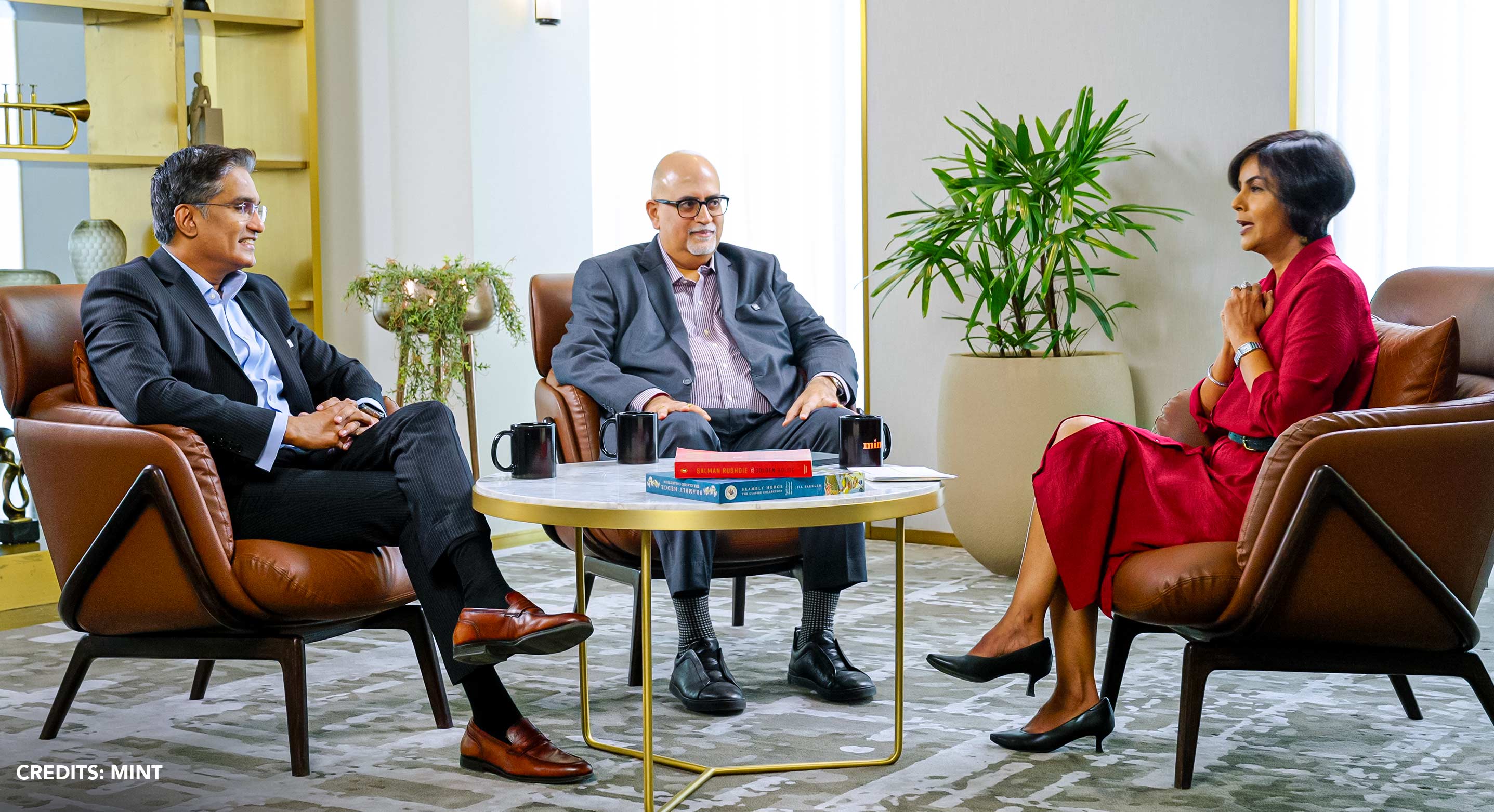
The latest episode of Mint's The CEO Dialogue, filmed at The Pearl Club, Mindspace Madhapur in Hyderabad, tells the same story. Ramesh said more than 200 of those GCCs arrived in the last three years. Ram Chandnani, MD – Leasing, CBRE India, put the city’s investment-grade office space at about 15 crore sq ft. In the Hi-Tech City market, Ramesh said, vacancy is about 2% in institutional-grade buildings, against about 12% when all buildings are counted. Rents have moved with it as deals on one Mindspace campus have gone from ₹75 per sq ft about two and a half years ago to ₹132 in a deal signed last month. He added that about 7.5 crore sq ft sits within a 1.5 km radius of Hi-Tech City, which at 100 sq ft per person could support around 7.5 lakh jobs.
How Hyderabad Became a GCC Hub
Ram traced the rise to firms such as Microsoft, Dell and Oracle, which set up in Hyderabad more than two decades ago and have kept expanding. Meta, Google and Microsoft are among the big names in Hi-Tech City today. He said the city’s investment-grade office stock could roughly double in the next few years.
Ramesh said Hyderabad was once seen as a spillover from Bengaluru. “Previously, Hyderabad was a seat on the table. Today, it’s becoming the table,” he said.
Demand Has Stayed Ahead of Supply
Around 2023, some observers feared Hyderabad would build too much too quickly. But first-half 2026 figures tell a different story. Ramesh said he studied 25 years of data and found only four years when supply clearly outran demand: 2000–2002, 2009, 2020 and 2021. “All other years, demand has always kept pace with supply, or demand has actually been more than supply,” he said. Some pockets of the country may see a year or two of oversupply, he added, but not a wider problem.
He also noted that the developer landscape is concentrated. Of about 15,000 developers in India, only around 15 build commercial space in two or more cities. Ram said construction cycles take 24–36 months, so new supply cannot appear overnight. He added that Hyderabad has no cap on floor area ratio, which lets developers build more on a plot.
Why “Institutional” Space Matters
Ram said commercial real estate was once funded largely by selling small units to individual investors. Over time, banks and private equity came in, and professional developers took charge of asset management.
Today, he said, global occupiers ask who their landlord is and whether the surrounding ecosystem will help them attract and keep talent. Institutional developers offer larger floor plates, campus-style layouts and better amenities that smaller, individually owned buildings often cannot match.
What Global Occupiers Ask for Now
Tenants’ briefs have changed. “It’s no more about floor plates. It’s about the ecosystem,” Ram said. Companies want to know where the talent is, how long employees will commute and what experience the office offers. ESG credentials are a given, he said, and occupiers also ask whether a building is ready for AI.
Ramesh said many GCCs now treat Hyderabad as a second global headquarters, with senior leaders, product development and R&D on site. Some tenants spend about three times on interiors what it costs to construct the building, he said.
That is why Mindspace built a 1.3 lakh sq ft club, its first, on its Hyderabad campus. The campus also has two hotels, with 420 and 170 rooms, and a 333-room Ritz-Carlton is due next year. “Our campuses need to be run like hotels,” Ramesh said.
Leasing is strong too. Ramesh said one building about to be handed over was taken by a single client for 15 lakh sq ft, and another was leased by three clients for 17 lakh sq ft. Together, four GCCs took 32 lakh sq ft.
AI as a Risk Being Watched
Talking about fears of AI-led job losses, Ramesh said the threat is real, but its depth is still unknown. Mindspace has about 3.6 crore sq ft of operating space, and only one tenant, with about 20,000 sq ft, has cited AI disruption as a reason to leave. Most exits are due to consolidation. “I don’t agree with this concept that no office. There will definitely be better offices,” he said. He expects Grade B and C buildings to face more pressure than institutional ones.
Ram said a CBRE Occupier survey concluded a few weeks ago showed AI adoption is still at an early stage. " Every global disruption has only benefited India,"he said. He noted that Indians hold about 6,500 leadership positions in existing GCCs, and pointed to "nano GCCs", small units of 20 to 50 seats that later grow into mid-size centres.
Talent, and a City That Feels Welcoming
Ram said talent is Hyderabad’s biggest draw, but not the only one. People from across India move there and feel welcome rather than like outsiders, he said. The city has also scaled up from its smaller-town past.
Ramesh said successive state governments since the late 1990s have been friendly to industry and technology. Many Telugu engineers who moved abroad in earlier decades now lead tech functions at global firms. When they can choose where to set up a GCC in India, he said, their first pick is often their home city.
What Mindspace REIT Plans Next
Ramesh outlined growth plans across the REIT’s four cities. It has five data centres and five hotels, and he wants to add more. In Hyderabad, he sees room for redevelopment. Developers typically build about 5 lakh sq ft on an acre, while Mindspace’s older campus gets about 1.5 lakh sq ft on the same land. Two redevelopments are close to delivery.
He said net operating income was about ₹2,600 crore last financial year, and doubling it over three to four years is “easily doable.” Its office assets are valued at about ₹52,000 crore across 69 buildings, and he wants to lift that to ₹85,000–90,000 crore over the next two years. That plan depends on finishing at least 1 crore sq ft of development. About 47 lakh sq ft is due in the next six months, and most of it is already pre-leased.
Risks and the Road Ahead
Both Ramesh and Ram said that infrastructure will decide whether the momentum lasts. Ramesh credited the Outer Ring Road, which he said takes travellers from the airport to Hi-Tech City in about 30 minutes off-peak and 45 to 50 minutes at peak hours. He also praised the airport, which can handle 4 crore passengers, and the metro, which ends near his campus. He said the metro now needs to reach other parts of the city and that some pockets are crowded.
Ram felt the pace of infrastructure and the availability of supply are the biggest risks. With vacancy under 2% in the micro-market, he warned that “if you’re not going to give the occupier growth, then he will go somewhere else.”
When asked about the biggest underestimated opportunity, Ramesh pointed to headquarters status. Several global firms already run second headquarters in the city, and he said the goal should be for all 500-plus GCCs to do the same. Ram added that Hyderabad’s mix of banking, technology, media, life sciences and pharma helps keep it balanced.
